


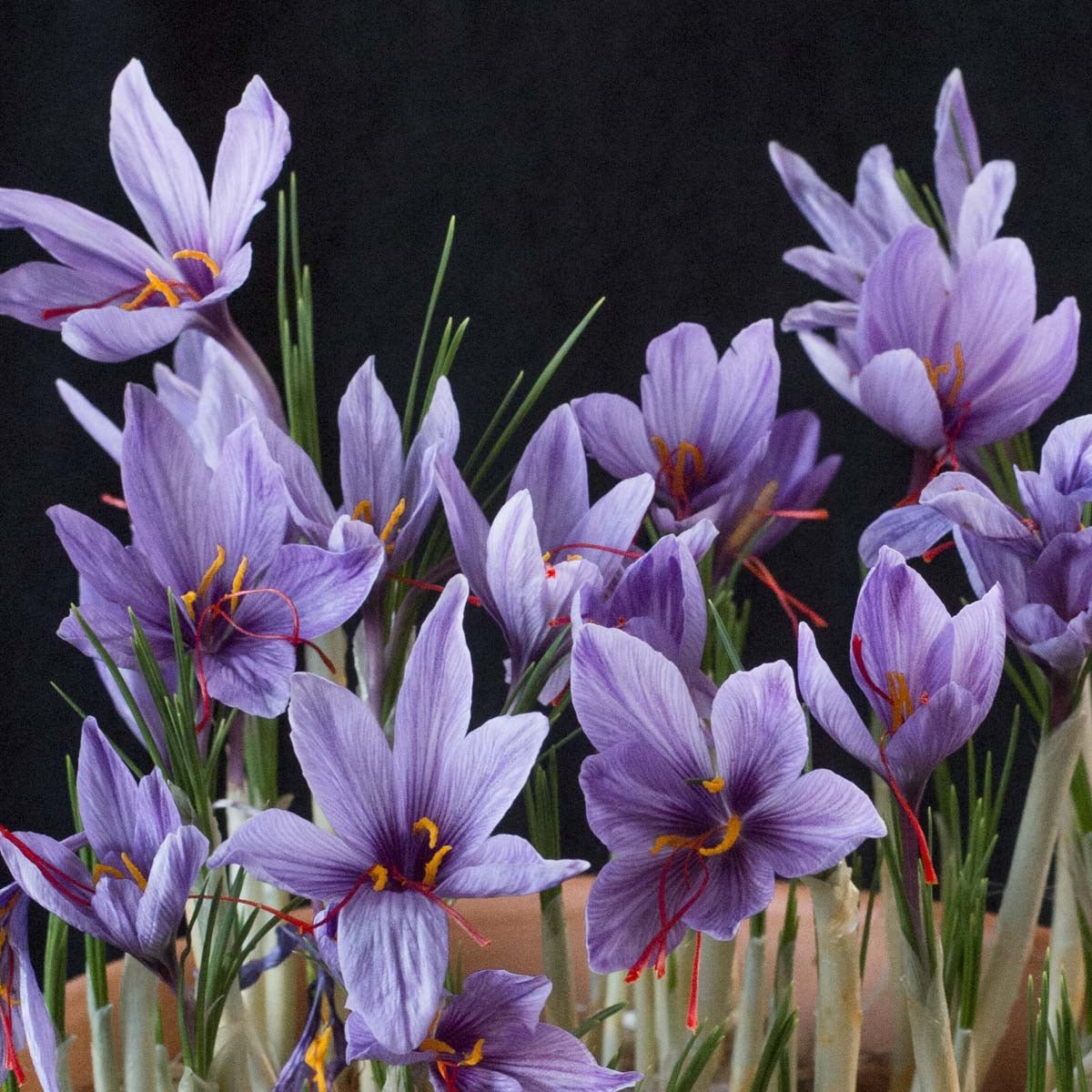
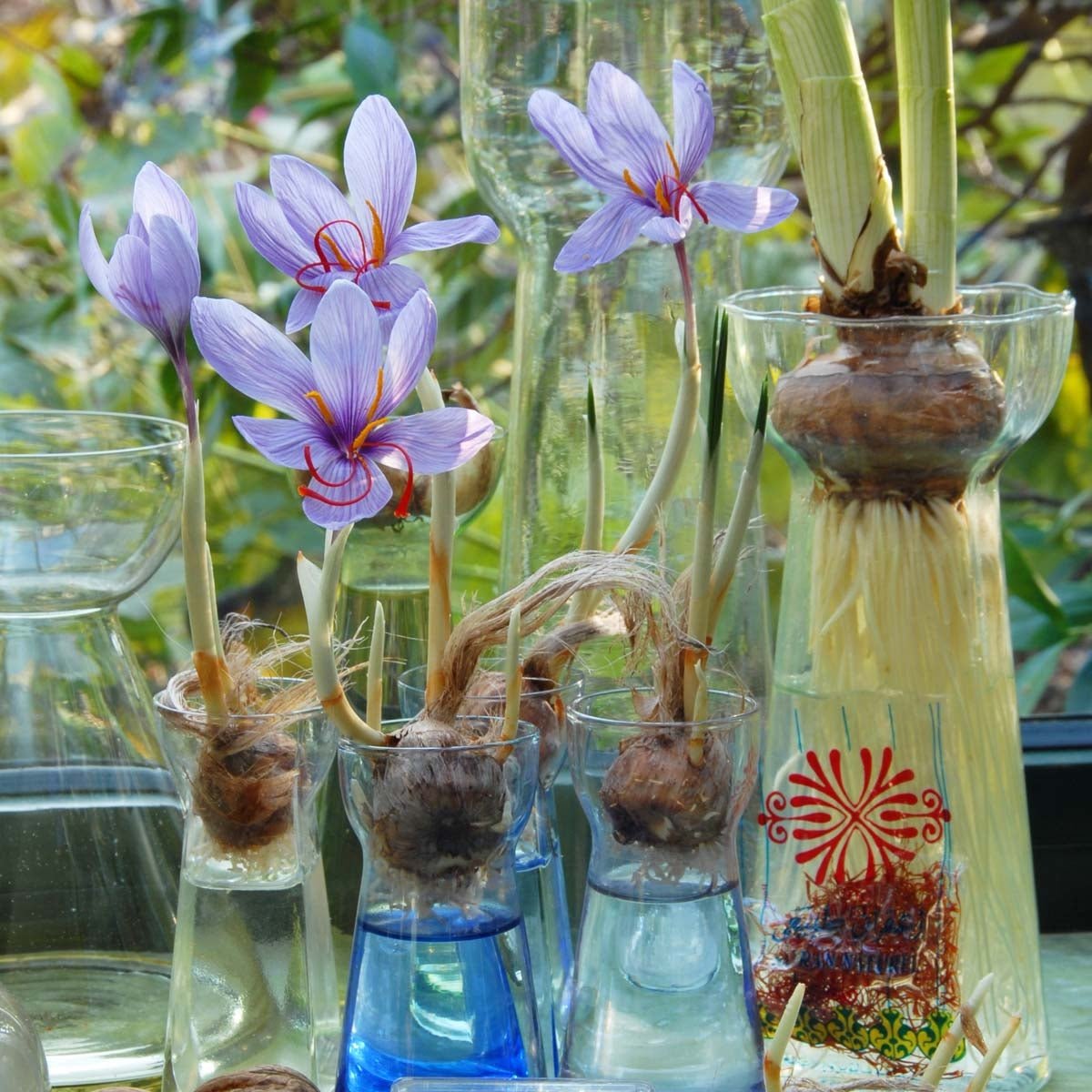


Crocus sativus 'Safron Crocus'
25 pieces per bag
Largest bulb size
Always true to variety
Lowest price per bulb
Known the world over as the Saffron Crocus, every other Crocus would wish it had the same name recognition as this autumn flowering Crocus. However, the Crocus sativus is not planted in parks and gardens nearly as much as other Crocuses, which is a shame because it is definitely worth trying.
Two things to keep in mind; it needs to be in a warm and sunny spot in the garden, if it has too much shade you may see flowers the first autumn after planting but it will definitely not flower the following years. It cannot get enough sun and warmth, really, for this Crocus the rule is 'the hotter the better'.
And plant thick tubers, only thick tubers flower. I often see them offered in the size 7/8 and 8/9 cm bulb circumference but these tubers are too small and give few or no flowers. The following autumn they can give reasonable flowers if the tubers are a bit thicker, but why not start immediately with tubers that are large enough to flower?
The Crocus sativus does not bloom naked like the Crocus speciosus does, it has clothes on. No, with the Crocus sativus the leaf comes along in the fall and after flowering the leaf grows further and can remain green until the end of May, beginning of June. Leave the leaf alone so that the tubers can grow well.
Severe frosts or snow are no problem, when the temperature rises above zero it will continue to grow happily. Sometimes it freezes while it is still in bloom, it has no problems with that either, after the frost it will continue to bloom happily.
Also pick some of those beautiful blood-red pistils from the flowers during the blooming, just to taste (you will have a red tongue for an hour or so) or just to poke around in the kitchen. But don't count on a large harvest of the precious saffron, because you need a lot of flowers for that. For 1 kilo of saffron, about 150,000 flowers are needed and for that many flowers you will need up to 50,000 thick tubers and at least 300 square meters of land.
But if you want to do this and you are able to harvest that one kilo of saffron we are talking about a price of around € 10,000 if it is well dried, has a good taste and is of good quality. With such a price you understand why they call saffron the 'Red Gold' in culinary circles. It seems that more than 90% of the saffron comes from Iran, it seems nice to see the saffron fields there bloom one day.
Bulb information
Flowerperiod
Choose options
Largest bulb size
Always true to variety
Lowest price per bulb
Bulb information
Flowerperiod
Largest bulb size
Always true to variety
Lowest price per bulb
Bulb information
Flowerperiod
Planting and caring for crocus bulbs
Plant crocus bulbs in well-drained soil in a sunny or lightly shaded position. For the earliest possible flowering, choose a sunny, sheltered spot. Crocuses are ideal for borders and pots, beneath trees and shrubs, and for naturalising in lawns.
Planting crocuses in grass? Wait until the foliage has completely yellowed and died back before mowing the area. This allows the bulbs to store enough energy for flowering the following spring.
Read our complete guide to when and how to plant and care for crocus bulbs.
You can order Crocus bulbs from us from early spring onwards for the next planting season. We take care of the proper storage and only ship the bulbs when the autumn planting season begins. This means you receive fresh bulbs at the right time for planting and a strong start in the garden.
Crocuses flower early in spring, usually in February or March, depending on the temperature and variety. This makes them some of the first flowers to bring colour back to the garden after winter.
Yes. Crocuses are very well suited to naturalising in lawns. If you plant them in grass, we recommend leaving that area uncut during the first mowing so the foliage has enough time to develop.
Many crocuses are excellent for naturalising and can return every spring. Some varieties gradually spread over time, creating larger and larger groups.
Yes. Because crocuses flower so early, they provide an important food source for bees when they become active again on the first mild days of spring. Their flowers provide valuable pollen.
Yes. Crocuses are very well suited to pots and other containers. Their compact growth makes them ideal for adding early spring colour to patios, balconies and entrances.