


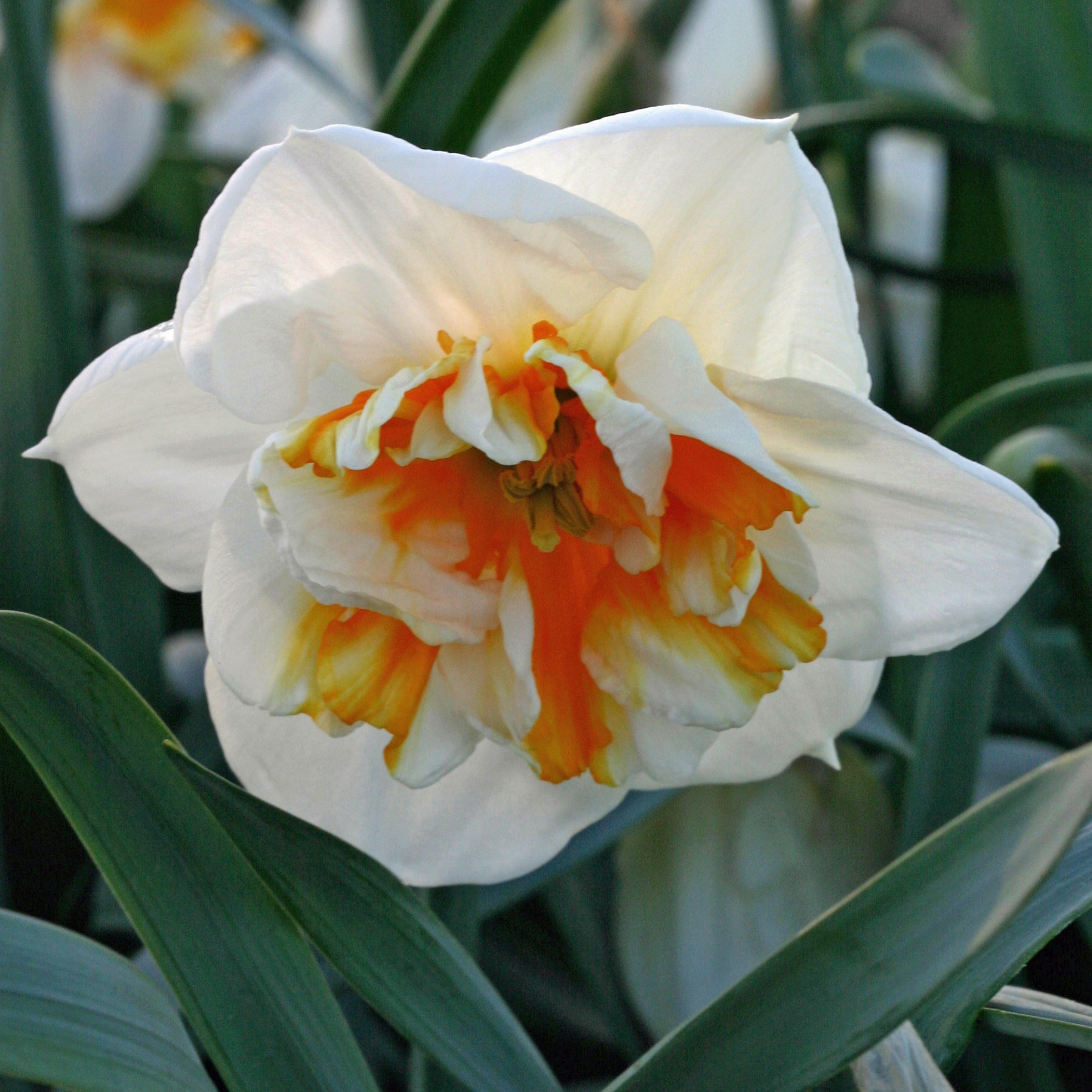

Dolly Mollinger
10 pieces per bag
Largest bulb size
Always true to variety
Lowest price per bulb
The books say that this unusual papilionaceous daffodil was introduced in 1958. I’ve known her all my life too, and she’s always been just as beautiful and special. Yet few bulb growers have included her in their cultivation programme. They did try, but always threw in the towel because Dolly didn’t grow very well and therefore didn’t yield enough. Fortunately, there’s still one grower in Lisse who simply carries on growing her. ‘I just charge a bit more for my bulbs,’ says this headstrong yet wise grower. ‘And Dolle Mollinger is beautiful, after all,’ he continues, ‘true enthusiasts are happy to pay those few extra cents per bulb.’ I think this wise man is right; there will always be enthusiasts for this daffodil, which remains unique despite its age.
Bulb information
Flowerperiod
Choose options
Largest bulb size
Always true to variety
Lowest price per bulb
Bulb information
Flowerperiod
Largest bulb size
Always true to variety
Lowest price per bulb
Bulb information
Flowerperiod
Daffodil planting and care
Plant daffodil bulbs in autumn in a sunny or lightly shaded position with well-drained soil. Loosen the soil thoroughly, then plant the bulbs with the pointed end facing upwards at a depth of approximately two to three times the height of the bulb. Leave around 5 to 10 cm between the bulbs.
Water after planting if the soil is dry. Avoid leaving the bulbs in persistently wet soil, as this can cause them to rot. In a suitable position, daffodils can return for many years and gradually multiply.
Read our complete guide to when and how to plant and care for daffodil bulbs.
You can order daffodil bulbs from us from early spring onwards for the next planting season. We take care of the proper storage and only ship the bulbs when the autumn planting season begins. This means you receive fresh bulbs at the right time for planting and a strong start in the garden.
Daffodil bulbs are planted in autumn, before the ground freezes. They will then flower in spring.
For a full display, Fluwel recommends around 40 daffodil bulbs per square metre. For miniature daffodils such as Tête-à-Tête, around 80 bulbs per square metre can be used.
Yes. Daffodils are reliable perennial bulbs and can continue growing in the same spot for many years. In a suitable location, they can also naturalise well.
This varies somewhat by variety. Daffodils grow well in sunny locations, while several varieties are also suitable for partial shade, so it is best to check the requirements of the individual variety.
Fluwel recommends removing the faded flowers after flowering. This allows the plant’s energy to go back into the bulb and helps prepare it for flowering again in the following season.