


Hyacinthoides non-scripta
€8.65
01-10-2026
Largest bulb size
Always true to variety
Lowest price per bulb
This wild forest hyacinth, also known as English Blue Bells, is often seen in the wild in England. If English garden lovers ask me for my advice, I recommend they plant this hyacinth rather than cultivated Hyacinthoides – so that the species don’t mix.
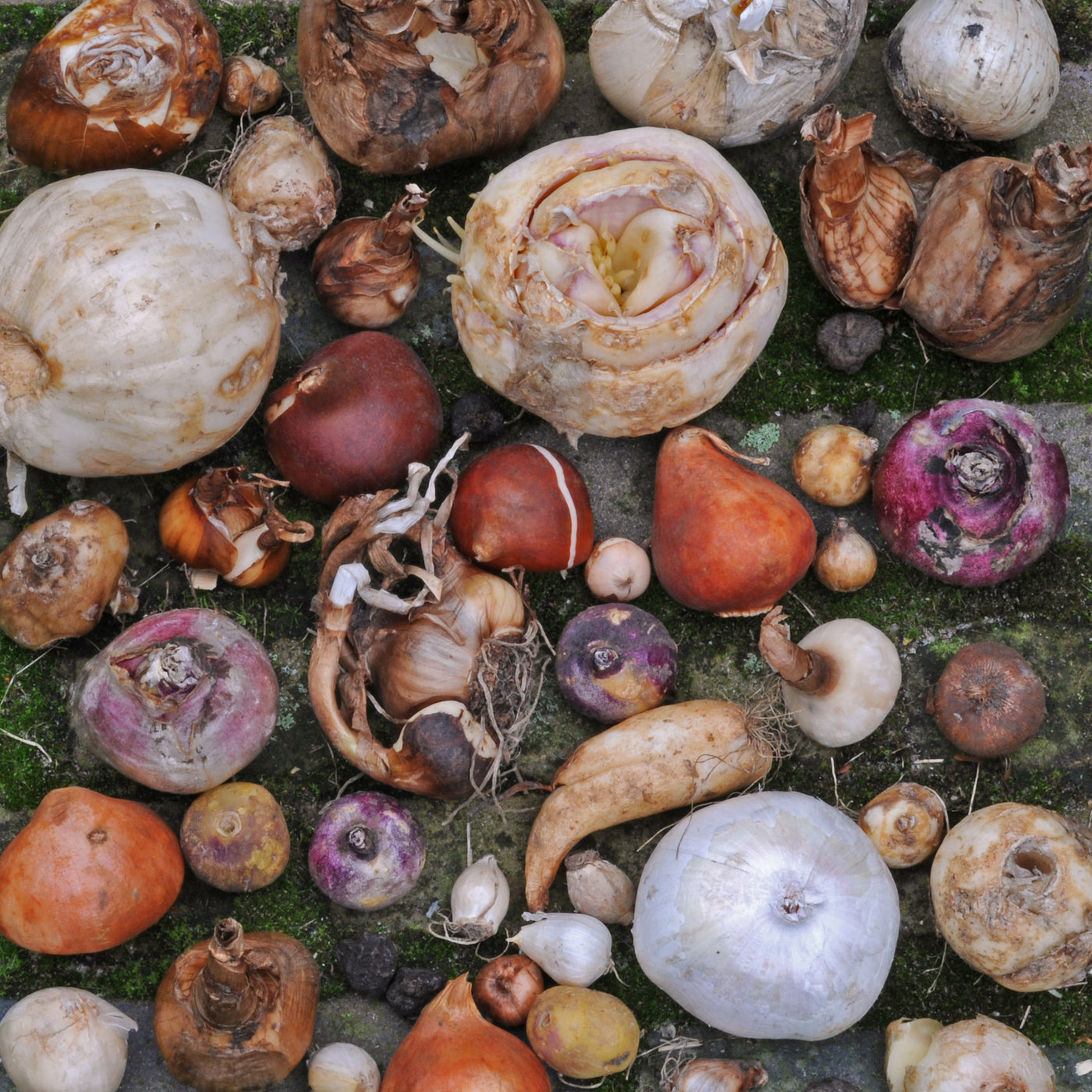
Planting flower bulbs
When should I plant my flower bulbs? If you want beautiful flowers such as tulips and daffodils in your garden in the spring, you will need to plant flower bulbs in the fall. This can be done as soon as the leaves fall from the trees. Make sure that the spring bloomers are in the ground before the frost sets in.
Summer bloomers such as dahlias and lilies should be planted in the spring so that they bloom in the summer.
Planting flower bulbs is not complicated at all. The same principles apply in principle:
- do not plant the bulb too deep in the ground (usually between 8 and 18 centimeters)
- provide good natural conditions
- be frugal with fertilizer and let the bulb do its work