The Kitchen Drawer
Dear readers,
Last week, it was time to look at Lilies. I visited many Dutch Lily growers and -sellers, which was a lot of fun, as I always see so many flower bulb colleagues that I don’t normally run into during this time of year. Open days are full events when it comes to Lilies, so we all took the opportunity to attend these wonderfully organised shows. Besides the Lilies, we talked about the Tulips. Too much rain, weird weather, it was too wet back when we planted them… considering all of that, most people are anticipating a not-so-great harvest once we dig them up. Right now, they seem to be doing alright. The smallest bulbs, the babies that haven’t produced a flower yet this year, probably took the most damage from the heat of this year, but the larger ones look fine. Still, no one dares to be too optimistic: it’s always better to be pleasantly surprised, right?
Roselily Arnoldo
But you should never listen too much to predictions like these. Usually, everyone goes back and forth during the season, alternating between reasons this season is going to be great and reasons it will absolutely suck. But back to the Lilies! We were looking at those. Most of the excitement this year was around the Roselilies, it is incredible to see what has been achieved with those flowers. And I expect they will keep improving them over the next couple of years, so there is lots to look forward to.
Starlily seedling
It is simply phenomenal to see the variety of colours and shapes in this group of Lilies. You may have noticed I just said Starlily instead of Roselily, and that has a reason. The growers have decided on this change. Roselilies have the reputation to be pollen-free, especially in the world of cut flowers. In that industry, that is a massive asset, because Lily pollen can cause gnarly stains. But these last few hybrids still have some pollen left in them. Those ones will therefore be called Starlily. A Starlily is a Roselily with some leftover pollen.
Starlilies come from a line of hybridisation focused on illness prevention. The tried-and-true trumpet Lilies were used to create these new varieties, and that seems to have paid off. It looks like it may be possible to grow these Lilies with drastically less chemicals and pesticides, and that is what growers want the most. The little bit of pollen that has been re-introduced with the trumpet Lilies has therefore been accepted: Growing Lilies as cleanly as possible is simply more important.

This was a beautiful surprise: I was given some flowers to take home, and this Roselily seedling gave me a flower with a 30 cm diameter! Unbelievable, that is the size of a pavement tile here in The Netherlands :)
The Dutch Lily Days are from Tuesday to Friday, and I always try to finish the last day at Pieter Jan Kos, who is a master of Roselily hybridisation. I’ve known him since we both drove to school on our motorbikes, and we can talk flowers for hours.
The greenhouse here is stacked with Lilies, each one more beautiful than the next. Pieter Jan knows the way to my heart and made sure I went home with a bouquet of Lilies bigger than myself, which meant I could take loads of photos and give a few of them to family and friends.
I especially wanted to take a photograph of that flower that was 30 cm in diameter, and as you saw on that earlier photo, the impossible happened and the measuring tape was exactly where I expected it to be, in the kitchen junk drawer. I am sure you all have one of those too. Usually it’s one of those places that has everything except that one specific thing you need, but this time, I actually found what I wanted. Miraculous.
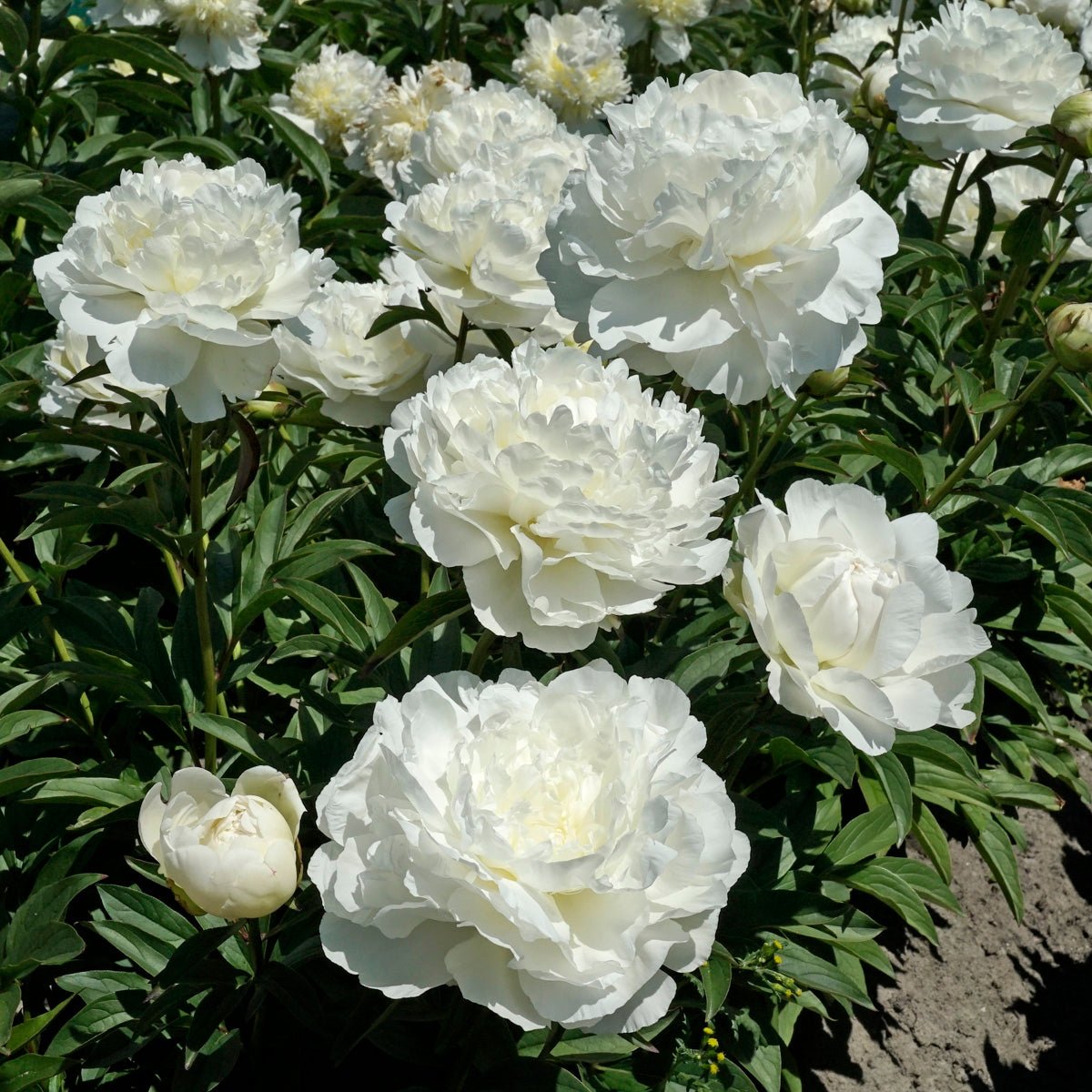
Peony showgarden from Peony grower Green Works
During the Dutch Lily Days, the Peonies are also at their best. I’ve seen so many of those too, the last couple of weeks, it truly is incredible. I am going to see which ones are still available and see what kind of pictures I have of them, and then hopefully we will be able to put together a great new and exciting assortment of Peonies, too. I will tell you more about that next week. For now, I have to go to Noordwijkerhout, where a collection of Agapanthus is waiting for me. I am going to see if it would be a good addition to the Fluwel web shop. It is an interesting one. The Agapanthus is an easy plant, and can be put in the garden and in flowerpots. We’ll see how it goes!
An RHS Agapanthus trial garden at Wisley Gardens
Kind regards,
Carlos van der Veek
PS: Do you already follow us on Facebook and/or Instagram? My colleagues share the most beautiful photos, videos and updates there.