

Groundswell
Dear readers,
This week I found myself in Weston, England, about an hour above London, drinking instant coffee that mostly tasted of water. Oh well.

Frequent readers may have already noticed that we are travelling with the same group as the one we were in when we went to France earlier this year. Johanna, John, Jelena and myself. This time, our destination was Groundswell, where an event was held about everything that has to do with soil. An event that seemed made for us!

John, Johanna and Jelena are the real experts, and I am trying to learn as much as possible. I think this field of study is incredibly interesting and important, and I was very curious to see what the event and its attendees were like. Sometimes, the news makes it seem like agricultural businesses only want to use pesticides and that they don’t care about the health of the soil or the surrounding people. Let me tell you, this could not be further from the truth. This event had over 10.000 visitors, and most of them by far were growers, farmers, or involved in agriculture in one way or another. The message wasn’t necessarily about how to get rid of every single chemical we use today, but about how we can all take steps to make it better, right now. Almost everyone who works with nature in some capacity knows that the health of the planet isn’t limitless. How to get as healthy as possible in a practical, doable way is extremely important information, and there is no better place to get that information than at this Groundswell event.

Of course, some things we a little bit too much for me, but that was a minority of everything we learned. There were countless examples of ways to improve the soil that were pragmatic and useful. There were wonderful readings of farmers sharing how they turned enormous patches of land that had been completely taken over by pesticides back into an oasis of flora and fauna. And, just as useful, there were lots of people sharing their failures, telling each other what didn’t work. I was in awe.

There was also lots of information about insects. Some of you might get shivers from this picture alone, but let me tell you, most of these people love insects. There were entire lectures dedicated to specific ones, accompanied by zoomed-in photographs that rival a horror film. Lice were the most popular insects to talk about. Just in the UK, there are over 600 varieties of lice. About 30 of those are a real problem when you encounter them, but all of those others are harmless. The lice that can do damage to your crops are sometimes hard to get rid of, but luckily, it turns out that they are the favourite snack of other living creatures. Most harmful lice have a natural predator, but when a farmer mows away all of the plants and grass surrounding the fields, those natural enemies have nowhere to live, and then you have to use something artificial to combat the lice. It’s an instance where it is important to ask yourself if cleaner is necessarily better. No one is saying that you should do absolutely no landscaping at all, but leaving some things be might greatly improve the health of the soil. Things that you throw into the compost bin could be useful, like ground coffee beans and teabags. Those can have a place in the garden, where they can become the favourite spot of an insect that can help you keep your plants healthy. And if you take some time to create a good pile of compost, you also have nutrients for your garden at hand.

But there is more. These bacteria contain nitrogen, and protists aren’t a fan of that, so they secrete about three quarters of the ingested nitrogen back out. This is where that little bit of sugar the roots make comes back into play: the roots like to get a little bit of nitrogen back in return, which makes the cycle complete and keeps everyone happy and balanced.
Jelena has an endless number of examples like this, about these small threats, but larger ones like nematodes also: those are small worms that eat both bacteria and protists. In turn, nematodes are one of the favourite meals of other fungi, that have created a way to catch them in the soil: the fungi makes a little loop, and when a nematode manoeuvres through that loop, they quickly tighten it and ‘strangle’ the nematode in order to then digest it. And whenever an organism eats something, it also poops something back out, which is usually something roots are happy with. There is so much happening in the soil, and there is lots left to be discovered by people like Jelena.

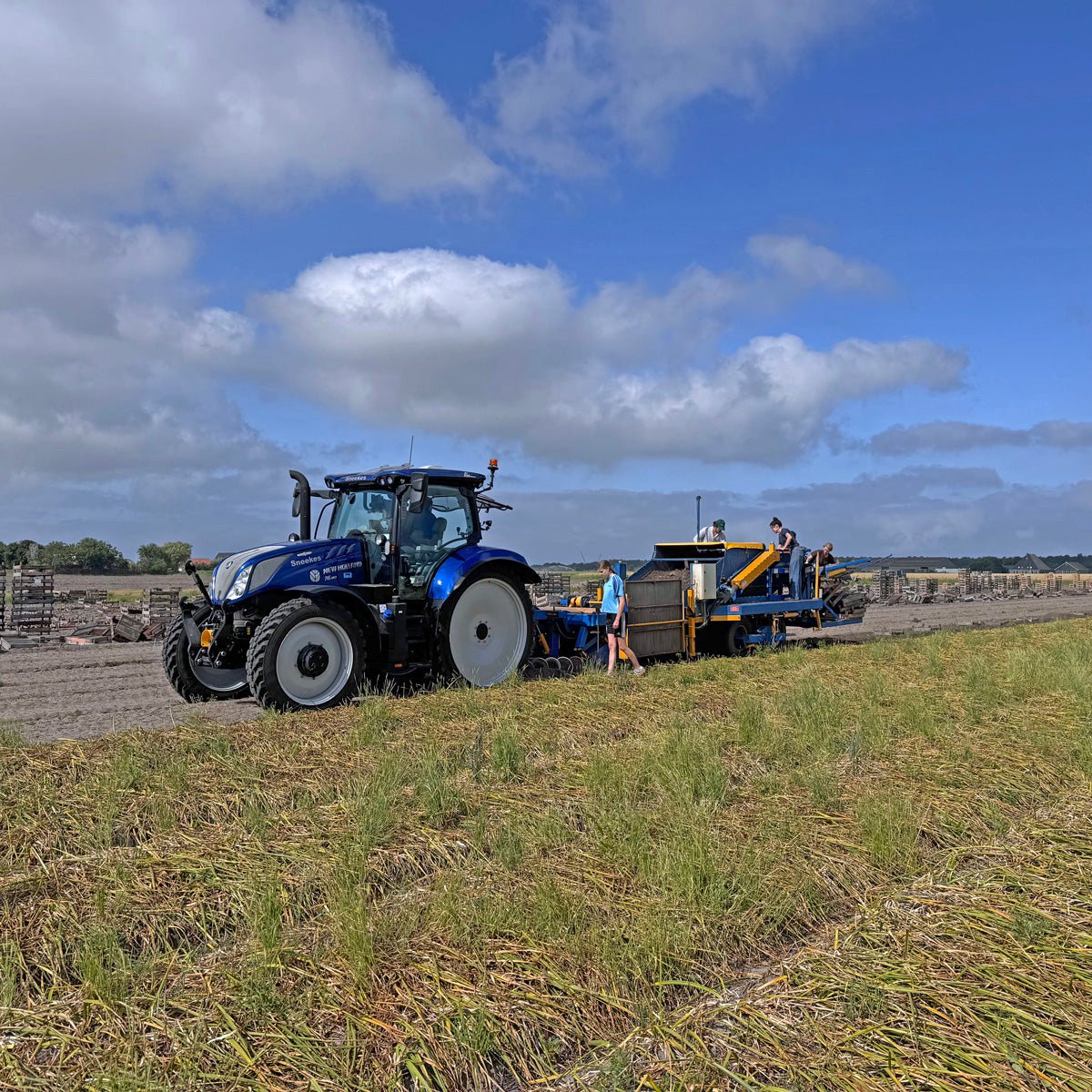
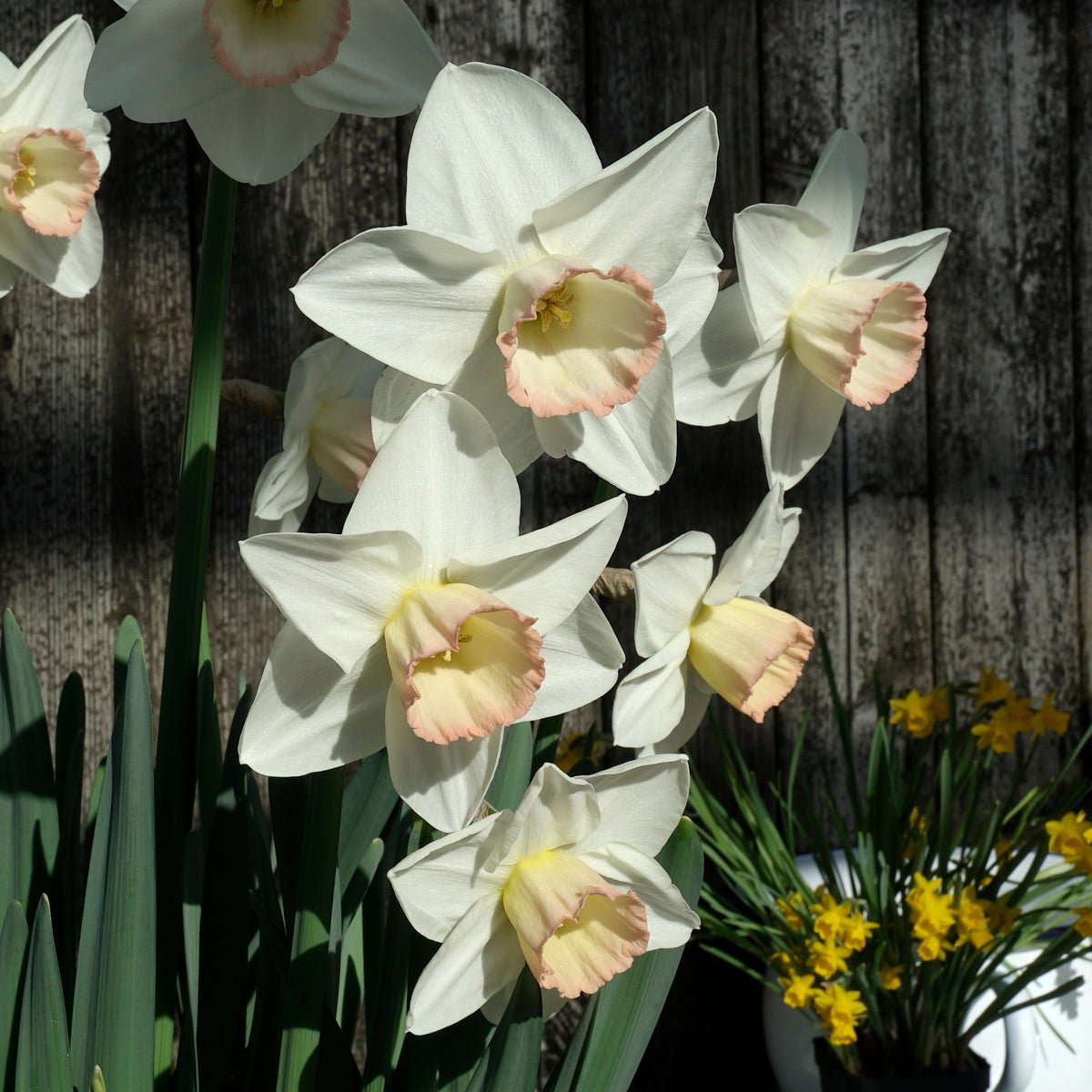
Jelena’s company Living Soils advices flower bulb growers on sustainable agriculture. The company makes compost that contains a lot of those desirable life forms. From this compost, they make a sort of tea, that can then be sprayed out over a new piece of land. The tea will improve the conditions of the soil to facilitate life and it also brings the micro-organisms you want back to it. Last year, we tried the Living Soils tea on our own Daffodils, and now that we have just harvested them I can truly say that they have never looked better. They have grown amazingly well, and we will be continuing with the treatment.


Carlos
PS: Do you already follow us on Facebook and/or Instagram? My colleagues share the most beautiful photos, videos and updates there.